Multi-Agent ERP Migration Workflow
Implemented workflow · Transformation ongoing
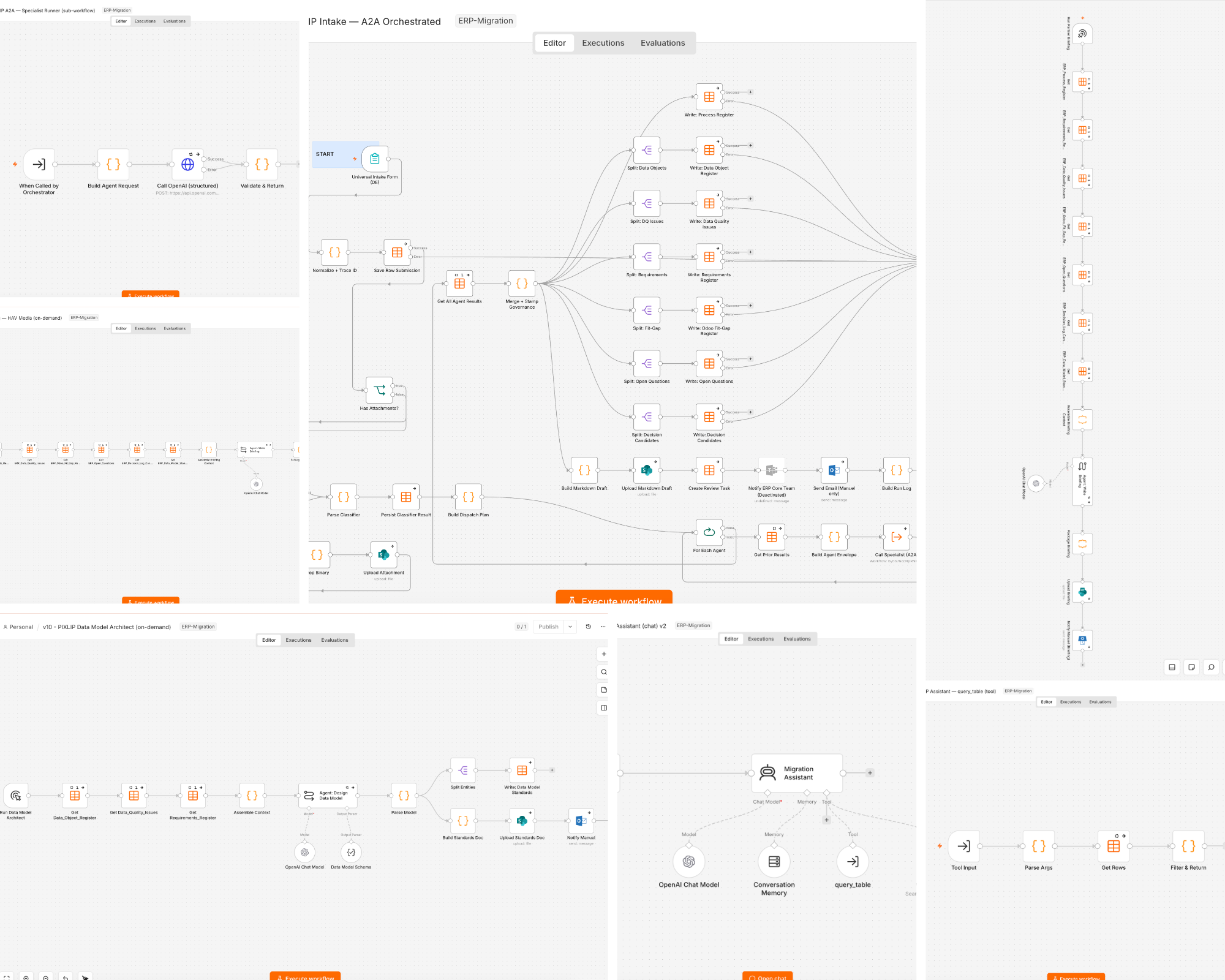
Overview
An implemented multi-agent workflow for ERP process discovery and migration preparation, translating employee process knowledge into structured, reviewable evidence.
Problem
ERP transformations fail when process knowledge remains fragmented, assumptions are mixed with facts and missing ownership or data-quality issues surface too late.
Context
The workflow is implemented and its transformation programme is ongoing. Confidential company names, internal records and generated documents are intentionally omitted.
My role
I designed and implemented the n8n orchestration, specialist-agent stages, structured schemas, traceability and human-review controls.
Solution
The workflow captures current-state processes, responsibilities, approvals, exceptions, data objects and interfaces. Structured follow-up logic separates facts from assumptions and produces reviewable requirements, open questions, data-quality findings and implementation-partner material.
Architecture
- Multi-stage n8n orchestration
- Specialist agents for process and data-quality analysis
- Structured output schemas
- Traceable process and requirements registers
- Follow-up logic for missing inputs, outputs and ownership
- Human review and approval gates
- Generated implementation documentation
Technologies
- n8n
- PostgreSQL
- Structured LLM outputs
- ERP process modelling
- Data-quality gates
- Human-in-the-loop review
AI components
- Specialist-agent analysis stages
- Structured extraction from employee process knowledge
- Follow-up generation for incomplete evidence
- Human-reviewed document generation
Engineering decisions
- Keep human approval authoritative instead of allowing autonomous process acceptance.
- Separate facts, assumptions, missing information and data-quality findings.
- Make every generated requirement traceable to its source evidence.
What is implemented
- Multi-agent intake and orchestration workflow
- Structured process, requirements and data-quality schemas
- Traceability and review registers
- Human approval controls
- Current-state and target-state implementation material
What is still in development or planned
- ERP transformation and implementation work remains ongoing
Current status
Implemented workflow · Transformation ongoing
Outcome
Creates a consistent migration backlog and reduces the risk of transferring incomplete processes or poor-quality data into a target ERP.
Evidence and confidentiality
Company and process details are anonymized; generated implementation material can be discussed without exposing confidential operations.